
How to Choose a Bed Frame That Actually Fits Your Space
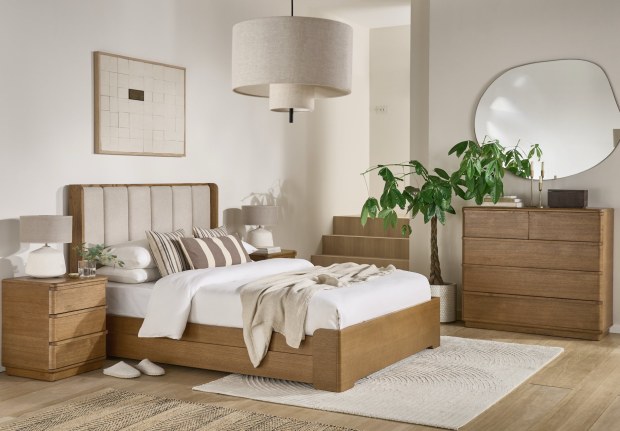
Choosing a bed frame sounds straightforward enough. You measure the room, you pick a size, you buy it. But anyone who has gone through the process knows it rarely feels that simple, particularly when you are working with a bedroom that does not have a lot of space to spare.
The right bed frame does more than hold a mattress. It sets the tone for the whole room. Get it right and even a modest bedroom can feel considered and calm. Get it wrong and the space closes in fast.
This guide covers what to think about before you buy, which styles tend to work best in smaller rooms, and what to avoid.
Why size on paper is not the same as size in a room
This is the mistake most people make at least once. They measure the floor area, check that the bed frame dimensions fit, and assume that is job done. But a bed frame does not exist in isolation. It needs space around it.
As a rough guide, you want at least 60-70cm of clear floor space on the sides you walk along, and ideally more at the foot of the bed if the room allows. That is not wasted space. It is what stops a bedroom from feeling like a corridor. If those clearances eat up everything you have, the bed is too big for the room, regardless of what the numbers say.
A standard UK double is 135cm wide and 190cm long. That catches a lot of people out. If your room is only 3 metres wide, a double leaves you with less than 80cm on each side before you account for the frame itself, which often adds a few centimetres. It fits, technically. But living in it is another matter.
In many cases, especially after downsizing, a well-chosen small double (120cm wide) or even a larger single makes far more practical sense and frees up enough floor space to make the room genuinely comfortable to use.
Which bed frame styles work best in smaller bedrooms?
Low-profile frames and bedsteads
Low beds are one of the most effective ways to make a small bedroom feel larger. When the eye line is kept down, the ceiling appears higher and the room feels more open. A platform bed or a clean-lined bedstead without a tall headboard or footboard keeps visual clutter down and gives the space a quieter, more relaxed feel.
The Bali 4'6" Low Foot End Bed is a good example of this done well. Crafted from solid oak with a deliberately low footboard, it has warmth and character without dominating the room. The Elva range is worth looking at too. The Elva 46 High Foot End Bed (https://www.reynoldsfurniture.co.uk/elva-46-high-foot-end-bed/p20347) brings a more elegant, reeded oak finish that suits a classic bedroom scheme.
Ottoman beds
If floor space is limited, an ottoman bed (https://www.reynoldsfurniture.co.uk/beds/ottomans/c48) is worth serious consideration. Ottoman beds lift on a gas-assisted mechanism and give you access to a large storage cavity beneath the mattress, ideal for bedding, seasonal items, or anything you want out of sight. In a smaller bedroom where chest of drawers space or wardrobe space is at a premium, the storage an ottoman provides can make a genuine difference to how the whole room functions.
The trade-off is weight and height. Ottoman beds tend to sit slightly higher off the floor than standard frames, and they are considerably heavier to move. The extra height is worth checking before you commit.
Divan sets with drawers
Divan sets offer built-in bedroom storage through side drawers, and they tend to sit lower to the floor than many bedstead designs. They are a practical choice for rooms where every bit of storage needs to work hard. Reynolds carries divan sets from Vispring, Hypnos, and Harrison, all made to a very high standard with natural fillings and pocket spring systems that justify the investment.
Simple, clean-lined frames
A pared-back frame in a neutral finish keeps the visual weight of the bed down. Metal or slim wooden frames that do not feature heavy decorative detailing have a lighter quality that suits smaller rooms well. If you want a frame that complements the room rather than competing with it, simplicity is usually the right instinct.
What to avoid in a small bedroom
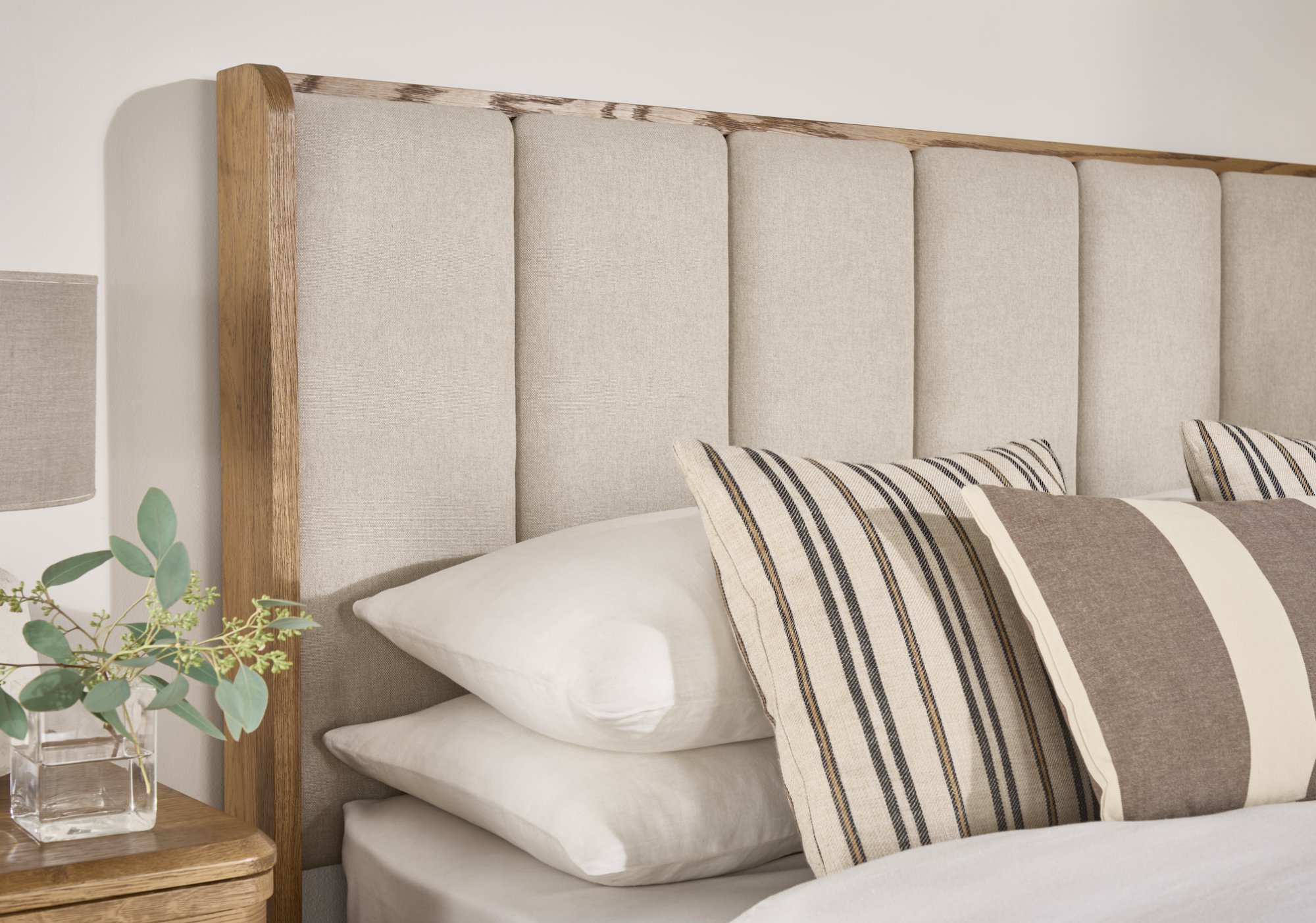
A tall, oversized headboard is the most common culprit for making a small room feel cramped. Headboards over 120-130cm high tend to dominate in a way that shrinks everything around them. If you want a more statement headboard, a separate headboard on an adjustable fitting lets you choose the height rather than being locked into what comes with a particular frame.
Overly ornate designs, carved posts, elaborate footboards, and heavy decorative detailing work beautifully in larger bedrooms but can make smaller spaces feel busy. The simpler the lines, the more open the room tends to feel.
Beds with a high base height can also be awkward in a smaller room. Under-bed storage sounds appealing but if you are pulling things in and out regularly, you will quickly find it frustrating. An ottoman where the whole base lifts is far more practical for anything you actually need to access.
Which material is best for my bed frame?
Solid oak is worth considering seriously for a bed frame, particularly if you are buying with longevity in mind. Oak is dense, stable, and tends to look better with age rather than worse. A well-made oak bed will outlast a mattress by a considerable margin. Both the Bali and Elva ranges are built from solid oak and oak veneers, a combination that gives the structural durability of solid timber alongside a consistent, refined finish.
Upholstered frames bring softness and warmth to a room, which many people find more welcoming in a bedroom used year-round for reading and resting as well as sleeping. The practical consideration is cleaning. Lighter fabrics show wear more readily, so in a heavily used room a darker or more durable fabric is worth choosing from the start.
How to measure a room properly for a new bed?
Measure the room in two directions. Rooms are rarely perfectly square, and a few centimetres can matter when clearances are tight. Measure at floor level and consider any features that reduce usable space: radiators, door swings, alcoves, built-in furniture. A door that opens into the bedroom rather than onto a landing takes up floor space every time it is used.
If you are buying without seeing the piece first, look for the overall frame dimensions rather than just the mattress size. The frame is almost always wider and longer than the mattress it holds.
Seeing it in person makes a difference
Photographs rarely give a true sense of scale. A bed frame that looks modest and understated on screen can feel considerably larger when you see it in a room. Reynolds Furniture has over 30 beds on display in the showroom on Bognor Regis High Street, including divan sets, bedsteads, and ottomans from Hypnos, Vispring, and Harrison. You can walk around them, get a feel for the proportions, and talk through your room dimensions with someone who knows the range well. Come in at any point, no appointment needed.
FAQs
What size bed frame is best for a small bedroom?
It depends on the dimensions, but a small double (120cm) often makes more sense than a standard double (135cm) in a compact room. It preserves enough floor space on either side of the bed to keep the room comfortable to move around in.
Do ottoman beds work well in small bedrooms?
Yes, particularly because they use the full cavity under the mattress for storage. In a bedroom where wardrobe or drawer space is limited, an ottoman can solve a lot of storage problems without taking up any additional floor space.
Does the height of a bed frame affect how a room feels?
It does. Low-profile frames keep the eye line down and make a room feel taller and more open. Very high frames or tall headboards can make a small room feel hemmed in even if the bed technically fits.
Is solid oak worth buying for a bed frame?
A solid oak frame is a long-term investment. It is significantly more durable than MDF or veneered board alternatives and develops a natural warmth over time that cheaper materials simply do not.
How much clearance should I leave around a bed frame?
Aim for at least 60-70cm on the sides you use to get in and out. Less than that and the room starts to feel difficult to navigate, even if the bed fits the footprint comfortably.
- 11th May 2026
DOMS DEALS COMING SOON