
Round Dining Tables: Why They Work So Well in Smaller Homes
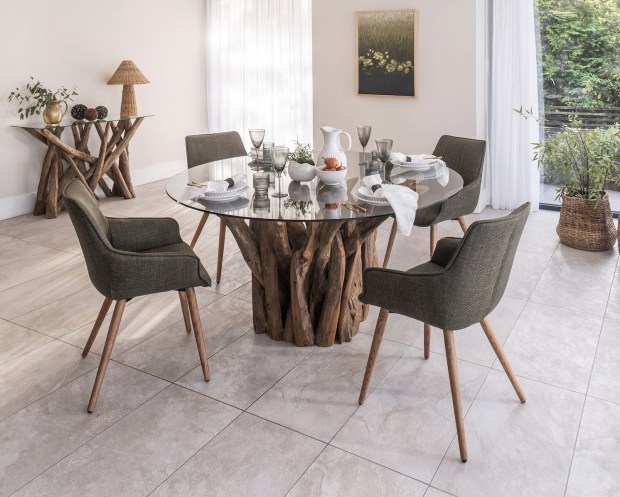
A rectangular dining table is the default choice for most people. It is what most of us grew up with, and it fits the mental image of a dining room. But in a smaller home, that default assumption is worth questioning. A round table is not a compromise. For many rooms, it is genuinely the better option, and often by quite some margin.
This guide explains why round dining tables suit smaller spaces so well, what to look for when buying one, and how to choose the right size for the room and the number of people you need to seat.
Why round tables work better in tighter spaces
The most obvious advantage is the corners. A rectangular table has four of them, and each one eats into the walkable space around it. In a room where you need to get past the end of the table to reach a door, a sideboard, or a window, those corners become a daily inconvenience. A round table has no corners. The curved edge means you can pass more easily, chairs can be tucked in more neatly, and the whole room feels less obstructed.
There is also something in how a round table reads visually. It softens the room. A large rectangular surface can feel imposing in a modest dining room, whereas a round table of the same seating capacity tends to feel lighter and more sociable. The eye travels around rather than along it, which makes the room feel less dominated by the table.
The third practical point is how a round table manages the space underneath and around it. Because there are no corners projecting outward, you typically need less floor clearance around a round table than a rectangular one of equivalent seating. That can make a meaningful difference in a room that is already working hard.
How many people can a round table seat?
This is usually the first question people ask, and the answer is more encouraging than most expect.
A 90cm round table seats two to three people comfortably. It works well as a kitchen dining table or in a compact dining area where you are mostly eating as a couple with occasional guests.
A 100 to 110cm table is the sweet spot for four people. It is genuinely spacious for four and can accommodate five at a push. This is the size that suits most smaller homes or downsized properties where everyday dining is for two but there is a guest bedroom in regular use.
A 120 to 130cm table seats four to six. This is a larger dining table by any measure, but because it is round it tends to feel more generous than a rectangular table of the same capacity. If you are downsizing but still want to host comfortably, this is worth considering.
One thing round tables do particularly well is seat an odd number of people. Three or five guests feel natural at a round table in a way that can feel awkward at a rectangular one where someone always ends up at an end alone.
Choosing the right size for your room
The standard guidance is to leave at least 90cm between the edge of the table and any wall or fixed furniture. That gives people enough room to pull out a chair and sit down without feeling cramped, and enough space to pass behind someone who is seated.
So if your dining room is 3.5 metres wide, the largest round table that works comfortably is around 170cm in diameter. In practice, most people choose a table smaller than the maximum the room allows, because a little more breathing room makes the whole space feel more relaxed.
Measure twice before you commit. Measure the floor area, but also look at where doors swing, where the natural route through the room is, and whether there is a radiator or a window sill that reduces usable space. A round table is more forgiving of an irregular room shape than a rectangular one, but the clearances still matter.
What to look for in a round dining table
Material and durability are the first practical considerations. Solid oak is one of the best choices for a dining table that is used regularly. It is hard, resistant to surface damage, and develops character over time rather than looking worn. The Fontwell Oak Dining Table is a good example of what well-made solid oak brings to a dining room. The Quercus range is also worth considering for classic oak quality.
If you are looking for something more contemporary, the Miami range offers round dining tables with SmarTops technology, which provides heat, stain, and scratch resistance in the surface finish. This is worth considering if the dining table doubles as a work surface, or if the room is used heavily by a family. The Miami tables are available in oak, grey, and light walnut finishes with a designer black metal base.
For a more traditional solid wood feel with oval or round options, the Romana and Lamont ranges are worth exploring.
Pedestal bases deserve a mention when it comes to round tables specifically. A single central pedestal, rather than four legs, keeps the area beneath the table completely clear. This means more legroom for everyone, easier chair positioning, and a cleaner look. It is particularly useful at a round table where chairs may be positioned at any angle rather than aligned to the sides.
Pairing chairs with a round table
Round tables work well with most chair styles, but there are a few things worth thinking about.
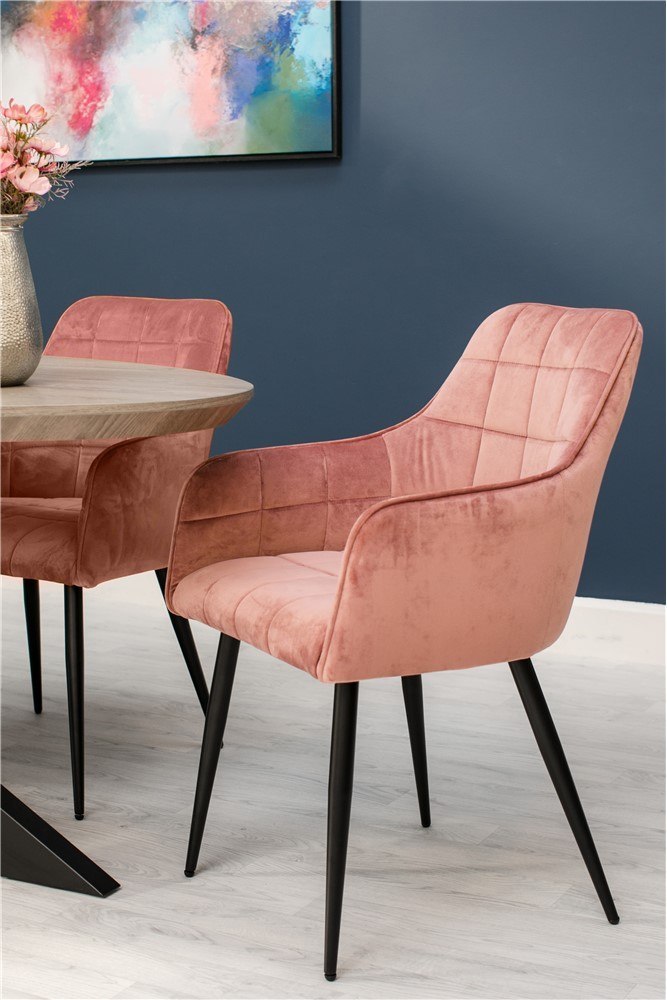
Chairs without arms are generally more practical at a round table than those with arms, because they tuck under the table more easily and give you more flexibility about how many people you seat. If you do want carver-style chairs with arms, keep them to two at most, at a table that can comfortably accommodate them.
The proportions of the chair matter too. A very large, tall dining chair can make a modest round table look undersized. Equally, a very low or delicate chair can look lost beneath a substantial table. Take the table dimensions with you if you are buying chairs separately, or browse the full dining chair range at and compare in the showroom where you can see the pieces together.
Consistent chair styles around a round table create a cleaner, more cohesive look. Mixing styles can work but requires more care to carry off well.
When a round table might not be the answer
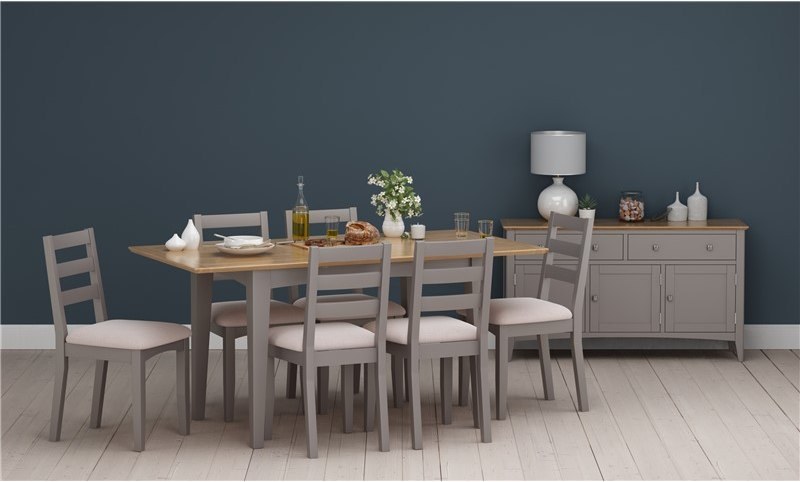
Round tables are not the right fit for every situation. If you regularly host large gatherings and need to seat eight or more, a round table large enough to accommodate that number will take up more floor space than an extending rectangular table that can be kept compact most of the time and opened for occasions. An extending dining table is usually the more practical solution for a household that entertains regularly but does not want a large table on a daily basis.
Narrow dining rooms that are longer than they are wide also tend to suit a rectangular or oval table better, simply because a wide round table would leave too little clearance on each side.
In most other situations, particularly in smaller square or L-shaped rooms, a round table earns its place quickly.
Come and see the options in person
The best way to judge whether a round dining table suits your room and your family is to see several side by side and get a feel for the proportions. Reynolds Furniture on Bognor Regis High Street has a wide range of dining tables on the showroom floor, including round and oval options. The team can help you work through the room dimensions, talk through the material and finish options, and make sure you leave with a table that suits the space properly.
Browse the full dining tables range or visit us in West Sussex to explore the range in person.
FAQs
Are round dining tables better for small rooms?
In most cases, yes. The absence of corners means less obstruction to movement around the room, and the curved edge tends to make a room feel less dominated by the table. For square rooms in particular, a round table often works better than a rectangular one.
What size round dining table seats four people?
A 100 to 110cm round table seats four people comfortably, with room to move and a full place setting for each person. A 90cm table will seat four at a push but is better suited to two or three.
Do round tables take up more space than rectangular ones?
For the same number of seats, a round table often takes up a similar or slightly smaller footprint than a rectangular one, and because the corners are eliminated the room around it feels more usable. The key is having at least 90cm of clearance from the table edge to any wall or fixed furniture.
What is a pedestal base on a dining table?
A pedestal base replaces the four corner legs with a single central support. This keeps the floor space under the table completely clear, allows chairs to be positioned at any angle, and gives everyone at the table more legroom. It suits round tables particularly well.
Can I extend a round dining table?
Some round dining tables have an extending option that adds a leaf and converts to an oval shape, giving you extra seating for guests without needing a permanently large table. Browse the extending dining tables range for options.
- 18th June 2026
DOMS DEALS COMING SOON