
Solid Wood vs Veneer Furniture: What Is the Real Difference?
Solid Wood vs Veneer Furniture: What Is the Real Difference?
If you have been browsing for a new dining table or sideboard, you have probably come across the terms solid wood and veneer. On the surface, they can look almost identical, which is why the distinction is often unclear at first. But once you understand how each is made, the differences start to make much more sense.
The good news is that this is not a case of one being good and the other bad. Both solid wood and veneer furniture are widely used across high-quality ranges. The key is understanding how they behave over time, how they fit into your home, and which one aligns better with the way you live.
What is solid wood furniture?
Solid wood furniture is made from natural timber all the way through. Whether it is oak, walnut or another hardwood, what you see on the surface is the same material throughout the piece. That consistency gives solid wood its weight, its durability and its character.
One of the reasons people are drawn to solid wood is the variation. The grain is never perfectly uniform, and you may notice knots, subtle colour shifts or natural markings. These are not flaws. They are part of what makes each piece feel individual.
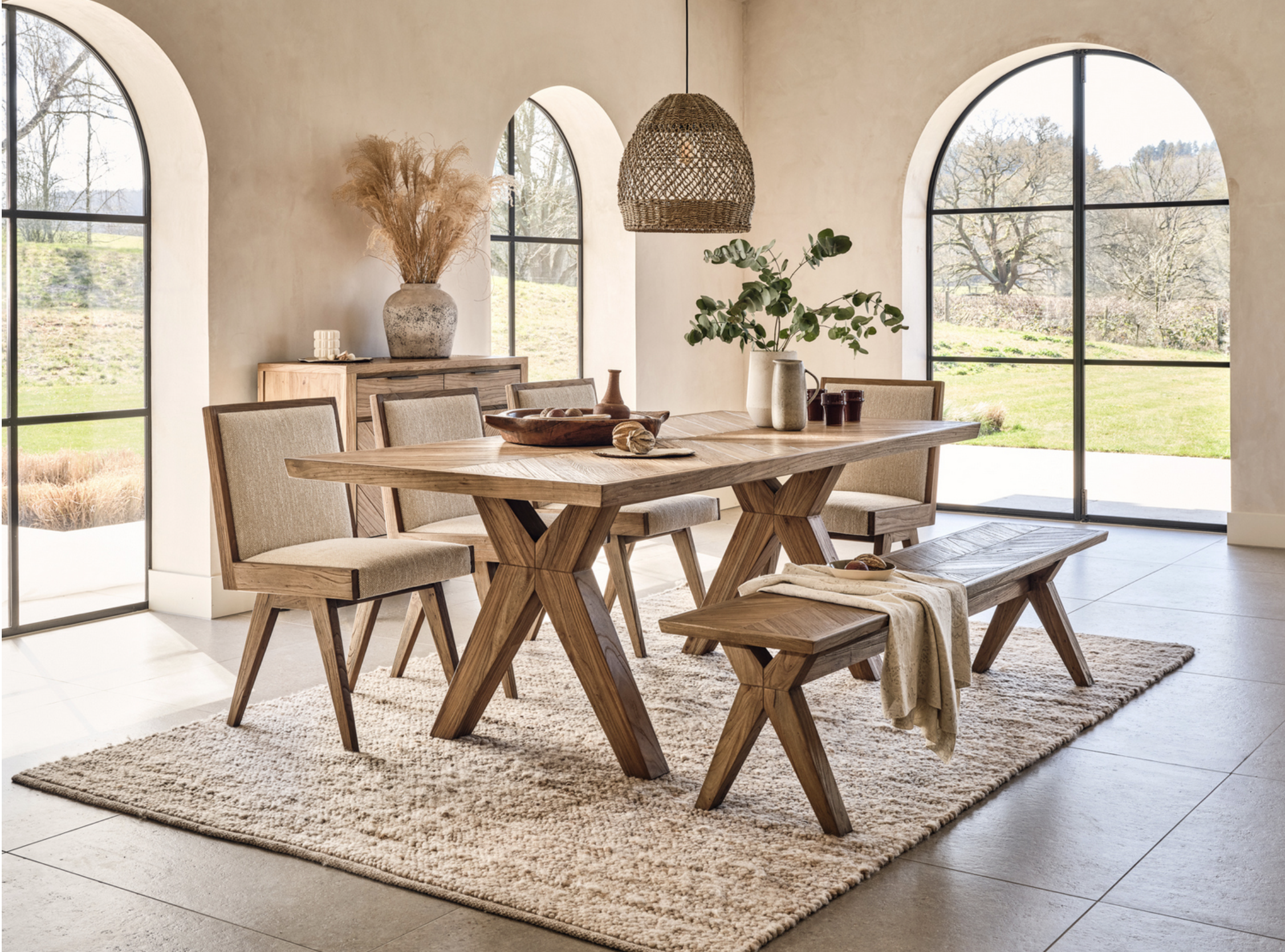
A good example is the Brunel 200cm Dining Table, which is produced from 100% solid European oak. It highlights the difference between furniture made from solid timber throughout and pieces that use a real wood veneer over a core material. You can see the Brunel table here:
https://www.reynoldsfurniture.co.uk/brunel-200cm-dining-table/p10570
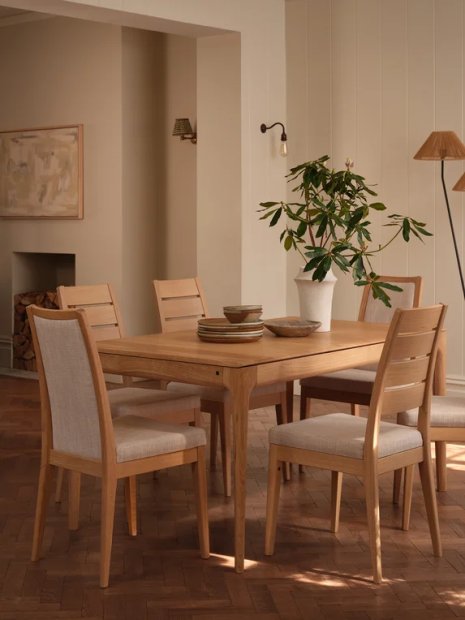
The Romana Medium Extending Dining Table is another strong example. Crafted in pale oak with beautifully shaped detailing, it highlights the kind of craftsmanship and natural variation that people often look for when choosing solid wood furniture:
https://www.reynoldsfurniture.co.uk/romana-medium-extending-dining-table/p787
That natural variation is not something to hide. It is often the very reason people choose solid wood in the first place.
What is veneer furniture?
Veneer furniture is constructed differently, but it is often misunderstood.
Rather than being made entirely from solid timber, it uses a thin layer of real wood that is bonded onto a stable core. That surface layer is still genuine wood, which means the finish can look just as refined as solid timber.
In many cases, veneer is chosen deliberately for design reasons. It allows for a more consistent grain across larger surfaces and can create a cleaner, more contemporary look. This is particularly noticeable on modern extending dining tables, where a uniform finish helps the overall design feel balanced.
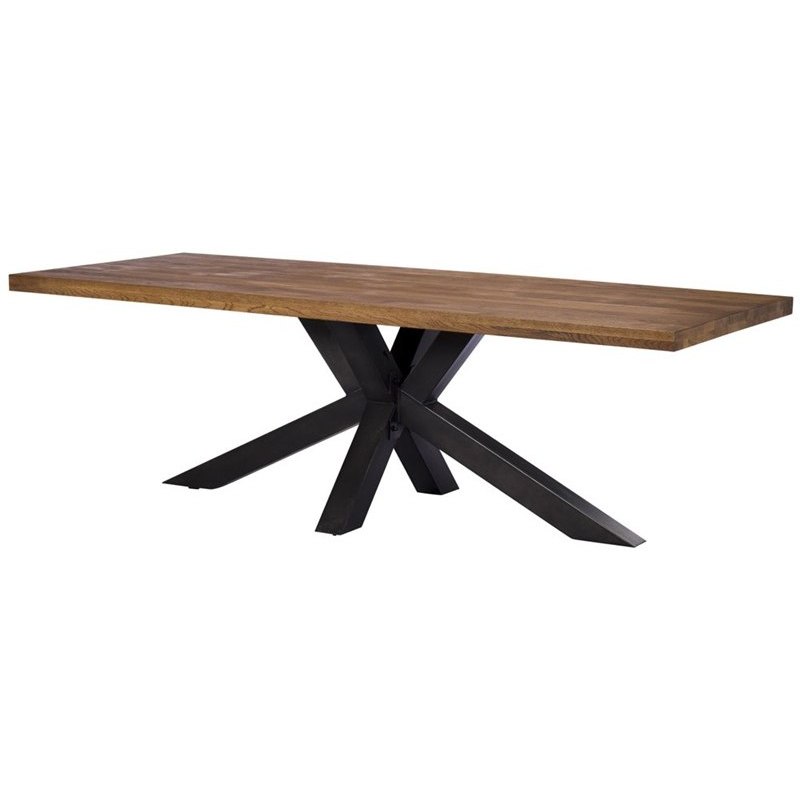
You can see this approach clearly in more contemporary designs such as the https://www.reynoldsfurniture.co.uk/bastille-large-ext-dining-table/p13672 where the finish is controlled and even, giving the table a more modern edge.
Solid wood vs veneer: what actually changes?
While appearance may be similar, the real differences show in how each material behaves over time.
Solid wood naturally responds to its environment. Changes in temperature and humidity can cause it to expand or contract slightly. This is completely normal and is factored into how furniture is designed, but it does mean the material is always subtly reacting to its surroundings.
Veneer, on the other hand, is more stable. Because it is bonded to an engineered core, it is less affected by those environmental changes. In homes with central heating or fluctuating temperatures, that added stability can be a practical advantage, particularly for larger surfaces like dining tables.
Can you tell the difference just by looking?
In many cases, it is not immediately obvious.
A well-made veneer piece can look just as polished as solid wood, especially at first glance. The difference often becomes clearer when you look more closely or compare pieces side by side.
Solid wood tends to have more variation. The grain may change direction slightly, and the surface can feel less uniform. Veneer, by contrast, often has a cleaner, more consistent appearance, which some people prefer, especially in modern interiors.
If you compare different tables side by side, the distinction becomes easier to spot. A contemporary design like the Bastille Extending Dining Table has a more controlled, consistent finish, while a solid timber design such as the Romana Medium Extending Dining Table shows more of the natural character and depth people often associate with solid wood.
Seeing them together helps you understand the difference far more quickly than reading about it.
Durability and everyday use
Durability is often where the conversation becomes more practical.
Solid wood has the advantage of being repairable. Minor scratches can often be sanded back, and the surface can be refinished over time. This makes it a strong option if you are looking for something that will last for many years and evolve with your home.
Veneer cannot be sanded in the same way because the top layer is thinner. However, modern veneer furniture is designed for everyday living and holds up well in most households. For many people, especially those using their dining table regularly, it performs just as reliably.
The deciding factor is often not the material itself, but how the furniture is used day to day.
Cost and long-term value
Price is often part of the decision.
Solid wood furniture typically comes at a higher cost due to the amount of timber used and the craftsmanship involved. Veneer offers a way to achieve a similar look at a more accessible price point, which can be particularly helpful when furnishing larger spaces.
Rather than thinking purely in terms of cost, it can help to think about value. Are you looking for something to keep long term and potentially restore over time, or something that fits your space and style right now?
Why seeing it in person makes a difference
This is one of those choices that becomes much clearer when you step away from the screen.
The weight of the table, the feel of the surface, the way the grain catches the light. These are all things that are difficult to judge from images alone. Moving between different styles in person gives you a much better sense of what you are actually choosing.
It also allows you to compare finishes side by side and ask questions about construction, care and durability. If you head into our store on the Bognor Regis highstreet, you will be welcomed by a member of our friendly team who can support you to pick the right furniture for you.
Final thoughts
Solid wood and veneer furniture are often positioned as opposites, but in reality, they are simply different approaches to design and construction.
Both can offer high-quality, long-lasting furniture. Both can look beautiful in the right setting.
The right choice comes down to how you want your furniture to feel in your home, how you plan to use it, and how you expect it to age over time.
- 29th April 2026
DOMS DEALS COMING SOON